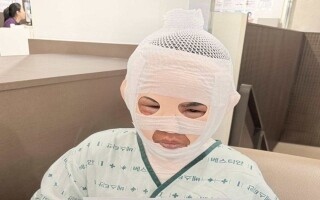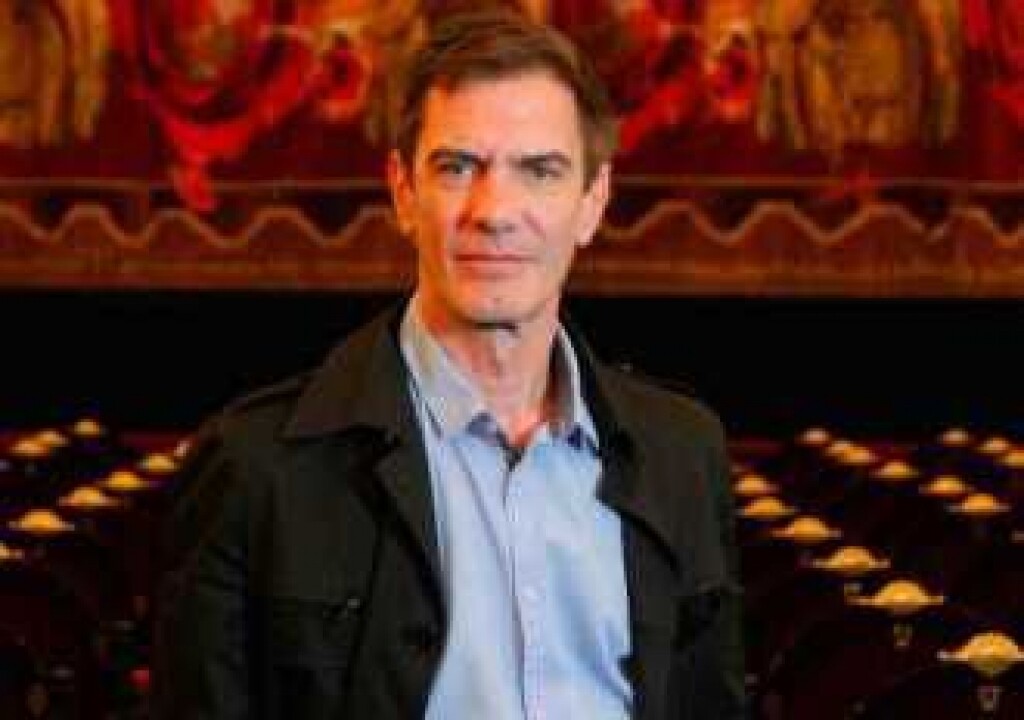
The ugliness of an ALS patient is very noticeable. It all ends there. The question is whether it is better or worse to believe in God when death begins to be seen close up. My average is high and I must maintain it. I remember the good impression that fact made on me and how it seemed logical that one would go through the agony well instead of suffering. When only horror remains, one has to look for drugs, sex, or, if you are lucky enough to live in a country that has it, euthanasia: the greatest achievement of humanity for those who have no hope and only coexist with hell. I have not decided to resort to it yet, but knowing that it is available to me relieves me. I believe that some things can be done. But an ALS patient does not form new relationships. You walk terribly, your voice becomes like a drunkard's, and you eat with the risk that drool will fall. ALS leaves you no glamour. Your wife will have another boyfriend, your children will remember you excitedly at Christmas, and all your friends will continue their lives, remembering you with joy for the moments lived. One must respect the lifestyle until the end. I expect nothing more. The others will continue their lives without remembering the dead too much, except in anecdotes. I do not boast about that; it simply does not happen to me. I think that when we die, we simply disappear under the ground or in ashes. They are connected to you by the past and the shared affection. You walk terribly, your voice becomes like a drunkard's, and you eat with the risk that drool will fall. One is a brain, and with ALS that perception is magnified. I experience it rather as a lack. We talked about it with my wife and we saw that we could still share some things, that it was worth trying. I am very attentive to my deterioration and I think about it daily. I don't think I'm the same anymore. Being an atheist all your life and becoming a believer in illness would be a disaster. I don't think I'm the same anymore. I always cry when I see the video. ALS leaves you no glamour. But love does not fix such a physical disaster. “You can't live on love” said Andrés Calamaro, and I sign that sentence. One working leg is the same as none. Having ALS, which can lead to a state of pure pain and discomfort, naturally leads me to think about that again. He was a good polemicist and now I can't speak well, I don't walk well, I have no social life, and everything is strange. My life was linked to physical and intellectual pleasures. I don't miss my past: I lived very well and I treasure a lot of experiences. Not because of the possibility of dying, which I don't care about. The most heroic thing that can happen to you is to fall. It takes two to walk, so I hope the disease continues with the other and we end with the banal enthusiasm of having a healthy leg. ALS brutalizes you. You start to want to hide yourself. Muhammad was touched by an angel who came down from heaven and dictated the Quran to him. Can anyone really believe that? Living the end has something interesting; the notion of an end is part of life. Physical pleasures disappear: your body becomes a prison and that is what I miss the most. I wanted my wife like I had never wanted anyone, already without the ego urgencies that we all have when we are young. Since Theo was born, we have spent a lot of time together. On the one hand it is bad, because you miss those minutes of illusion, but I prefer to live without any other expectation than to get worse. The brain remains, and it is the only organ worth it. I have to solve that problem, because I always loved beauty. A bloody agony is something one must avoid for oneself and for others. Life should have partial wakes. The Dario of before the disease is dead. The big question is what can be done with a brain and a hand. I was 54 years old and it was the ideal time to have a child. I realize that they also perceive that I am another person, but they don't say it. By Dario Lopérfido (*) Having ALS is shit. It takes an act of faith, an unconditional surrender of thought that I do not have. People associate a serious illness with speaking to the patient as if he were a child, under the horrible idea that that tone is a way of showing love. With the millions of people who die every day, it is illogical to think that there will be a classification of each one for their final destiny. Of all the tortures that the disease has in store for me, being a limited father is the worst and the one that has no solution. Loving beauty and becoming ugly is one of the most difficult things. Fortunately, no one remains pending a dead person. Except for exhibitionist patients, those who are in a wheelchair unable to move anything and feel they have to show it as something normal. Current medicine feeds on the idea of stretching life, but the final stretch cannot ruin what came before. The same person who used to look at you with a spark of sympathy, and even an imperceptible sexual tension, now looks at you with pity. Everything makes me laugh and if I try any of that I am tempted a minute later. I would like to believe in something, because the moment when one tries something until one realizes it is a fraud is usually pleasant, but I cannot. I only believe in antidepressants and some illegal drugs to keep my spirits up. Otherwise, there is no dramatic treatment that serves to explain to family and friends that one “is fighting”; ALS is a disease of unbearable ordinariness. He recorded the album and the video dying. Besides, I never believed in God and if I became a believer now it would seem like an opportunist who wants to earn merits because the end is approaching. It affects me the most, to the point of having evaluated euthanasia when I started to feel bad, because I wondered what was more traumatic for Theo: a dead father or a deteriorated father. I have always thought the same about this. I don't believe in anything: neither miraculous virgins, nor reiki, nor family constellations, nor homeopathy. Believers have expectations; atheists have it worse facing our destiny: to be an incinerated or buried body. I was feeling bad, but the public applauded twice as much. I imagine death waiting for Bowie to finish recording. I have already had a fabulous and intense life. He was a good polemicist and now I can't speak well, I don't walk well, I have no social life, and everything is strange. Being an atheist has the advantage that one lives with intensity what remains. And the dead man does not know anything, because he is dead. But ALS turns you into another person in the stage prior to death. I would have liked to believe in God, but I can't. Writing, for example, is what I do every day in my life as a disabled person. I must admit that I have a complicated characteristic for being sick. I don't believe in God and I'm not even agnostic: I'm an atheist. My tolerance levels have dropped and the only thing I accept is that they speak to me seriously or that they make me laugh. Years ago I saw a Canadian film called The Barbarian Invasions, in which a terminally ill patient spends his agony with a young woman who brings him heroin as a palliative. Intellectual pleasures, on the other hand, I can maintain. Reading, writing, talking to friends, listening to music, watching movies: all that is still possible. What intrigues me is what a patient produces in others. The current one is another person with another life and other thoughts. Bye NOBU, bye neighborhood pizzeria, it was nice to meet you: you no longer want them to see you eating and drinking. Falling in the street cannot compare with coming out naked from a chemo session. I also remember discussions with people who thought it was wrong. In Annihilation, by Michel Houellebecq, there is a character with cancer in the mouth who refuses a bloody operation and decides to spend his last days in peace having sex with his wife. The system only cares that the patient lives longer, it doesn't matter how. The only thing that can interest me about this issue is to demand from my brain as never before when I was healthy. Being an atheist and having an incurable disease opens a topic for reflection. I am not at that point yet, but I am going to have to put into practice things that I have thought all my life. One can go through a terminal illness as long as life is not just horror. I have not decided to resort to it yet, but knowing that it is available to me relieves me. Swearing calms me, it gives me peace. A consequence of ALS is the infantilization of the patient. Above all, I would like to clarify that I am not a fanatical atheist, like Christopher Hitchens. But he leaves a legacy to his family: they can say “how he fought it”. In my case, ALS took a year to ruin a foot for me. Euthanasia is the most liberal of deaths and is much better than committing suicide, something very traumatic for those who remain. Besides, those who commit suicide had never done it before: they can fail or make a mess. Turning it into speeches of good is unbearable. There are parameters that serve as a guide: being able to work is a reason to live, moments of pleasure are another. Like when they ring the bell in English pubs to warn that they are about to close and people have a couple of quick beers. Cultivating goodness is unbearable always, and when one has a disease like this, it is even worse. The patient, before being a patient, is a person, and people have desires and needs. I fell quite a bit, but falling makes you look a bit like an idiot. It's impossible to put epic into that. We lived in Berlin and we were together all the time. But there is something that does affect me: missing a lot of my son's life. I thought I was not going to be a father until I met my wife, and from the moment she became pregnant a luminous stage began in my life. All that happened until Theo was five years old and it makes me very angry to think that he does not remember and that the image he will have of me will be that of a sick person with whom he shared things in a limited way. There is no playing soccer, no walks, no going to the amusement park. The most civilized death is the one one decides in full use of one's faculties. I have no interest in testing how far my capacity to bear pain or physical ruin goes. And I find pity unbearable. And I demand the unalterable right to swear. Game over is the moment when one stops breathing. Old age seems odious to me; dying without going through that human catastrophe, on the contrary, seems a relief to me. The problem with ALS is that it is a disease without epic. The absurd examples are infinite. The man was dying, but the glamour was undeniable. David Bowie released Blackstar three days before dying of cancer. I prefer to live it like this, without comfort nor any God to be angry with. People whom antidepressants affect a lot; otherwise it cannot be explained that they want to exhibit such a ruin. Unless you are Stephen Hawking, who was always an aesthetic disaster but had a privileged mind. One hand and one leg work well for me, which allows me to work, but at home, hidden. I always thank those who tell me they pray for me; I am grateful to be a passive subject of the prayers of others. I like some things of the Catholic religion and Judaism, but they have very unbelievable stories for someone who needs verifiable facts. There are no anecdotes to tell. A good cancer gives you all the time with terrible treatments during which you can appear naked and say “I am going to beat cancer”. In most cases, the naked one dies. If you have ALS, the only alternative not to become a plant in front of the television is to expand brain activity to the limit. Writing calms me because I think that when he grows up and I am dead, he will be able to read me. I wrote these chapters, which will be part of a future book, listening to Tannhäuser Overture, by Richard Wagner, by the Berlin Philharmonic conducted by Claudio Abbado. I don't believe in alternative medicine or in laboratories that get rich selling ibuprofen, and no owner of any laboratory is going to sell his yacht to research the cure for a disease that affects very few people. I understand them, ALS is not a popular cause. Art and glamour: facing death with beauty. I remember the director of the Berlin Philharmonic, Claudio Abbado, conducting concerts thin and haggard while cancer was eating him. My cell phone shows photos in which we three are: in Berlin, in Madrid, in Buenos Aires, always together. In nothing. In “Lazarus” he sings: “Look up here, I’m in heaven / I’ve got scars that can’t be seen”.