The leader of North Korea, Kim Jong-un, called South Korea's plan, with the approval of the United States, to build a fleet of nuclear-powered submarines a "threat" to his country's security.
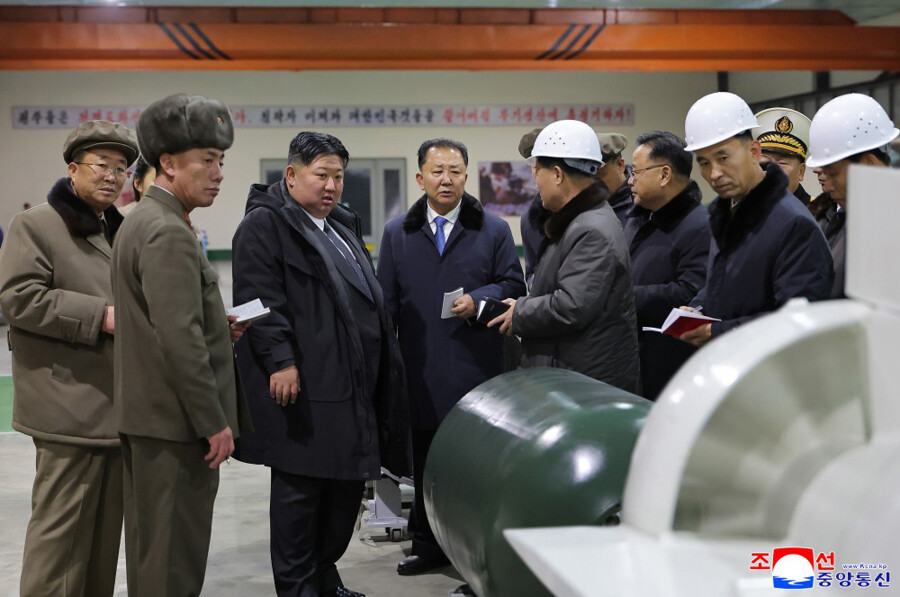
During an inspection to see the progress in the construction of his own 8,700-ton nuclear submarine, Kim stated that the plan "will worsen the instability in the Korean Peninsula region," according to a statement published this Thursday by the North Korean state agency KCNA.
According to the agency, Pyongyang considers Seoul's plans "an offensive act that seriously violates its security and maritime sovereignty," as well as "a threat to its security that must be confronted."
The leader thus referred to the decision of US authorities to partially lift their restrictions on South Korea's uranium enrichment in order to build a fleet of nuclear-powered submarines that will allow it to counter the superiority that North Korea currently has in this area.
During his inspection, the North Korean leader stated that Pyongyang's construction of its own nuclear submarine, equipped with guided missiles, will be "a crucial change that will mark an era and further ensures the level of war deterrence that the country has achieved," according to KCNA.
South Korea has long aspired to develop its own nuclear reactor-powered submarines, but its main obstacle lies in the legal and technological restrictions derived mainly from its atomic pact with the US, the so-called "123 Agreement," which prohibits this Asian country from enriching uranium or reprocessing spent nuclear fuel for non-peaceful and non-civilian purposes.
Since nuclear-powered submarines require highly enriched uranium or specialized nuclear fuel regulated by this agreement, South Korea cannot proceed without Washington's explicit approval or a substantial amendment to the treaty.
Currently, only six countries in the world possess and operate nuclear-powered submarines, an asset with which Seoul hopes to reverse Pyongyang's current superiority, which currently has a fleet of about 70 diesel-electric submarines, almost triple that of its southern neighbor.